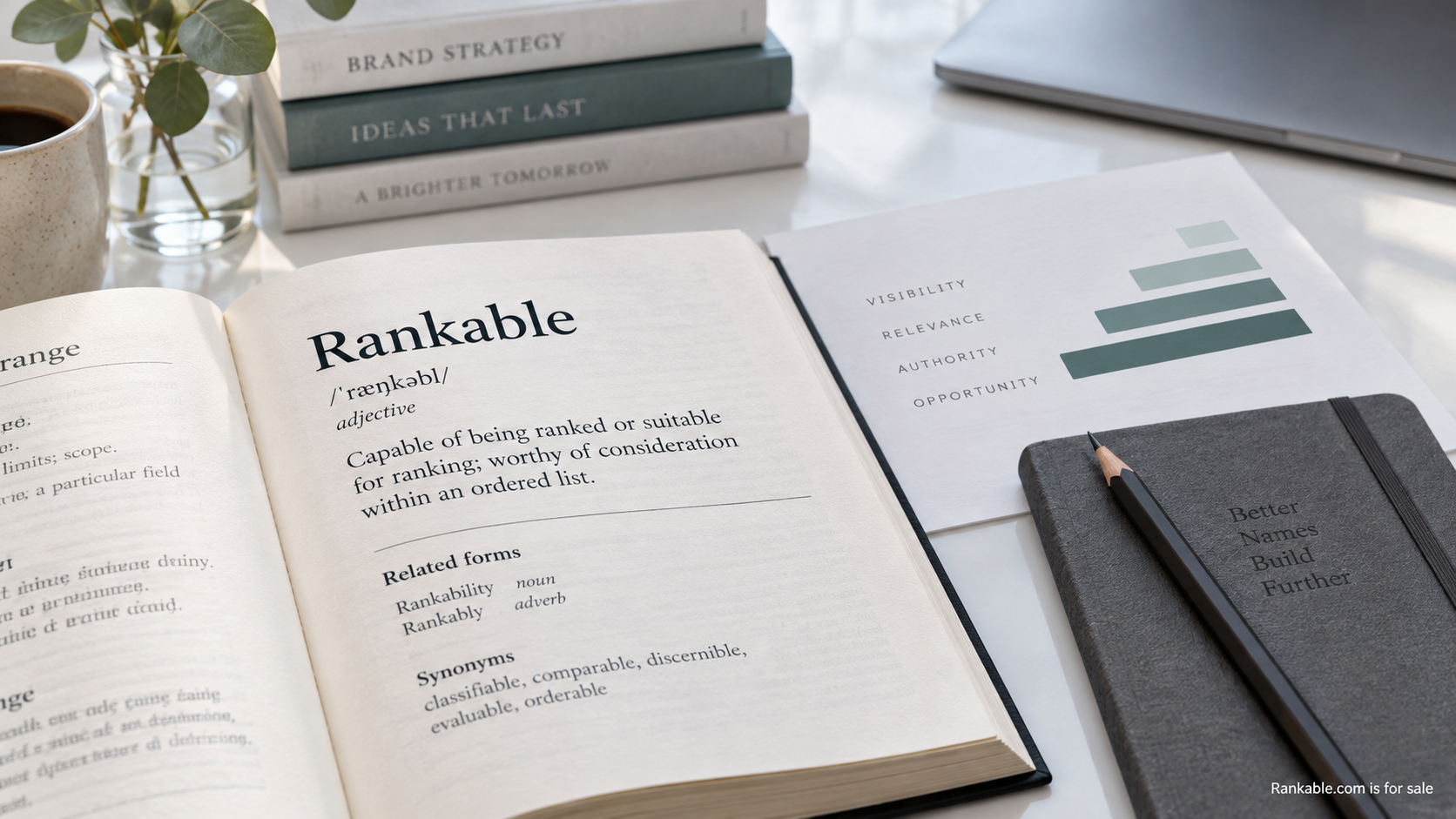
A familiar word can get a product conversation started, but it cannot finish the explanation. Someone hearing Rankable may think of search results, a comparison service, or a scoreboard. That range is useful when considering a business identity. It also creates a practical task: decide which association should be strongest for the customer the business wants first.
For a brand, the useful question is what a prospective customer expects to be able to do after arriving. A content lead might expect to investigate search performance. A shopper might expect to compare options. An editor might expect a framework for making a list. Those are different expectations, even though the same word can plausibly introduce all three.
Begin with the situation, not a list of adjectives
Write down a moment when someone would need the proposed product. Be specific enough that a colleague could picture it. “A marketing manager preparing the monthly content review” is more useful than “businesses that want growth.” The first description contains a person, a recurring task, and a likely setting. The second leaves almost every product decision open.
Then describe the difficulty in ordinary language. The manager may have several reports and no agreed next action. A comparison shopper may understand the available features but struggle to judge which matter. A publisher may have good research without a consistent way to present it. The name should sit beside that difficulty naturally, rather than forcing the difficulty to fit a preferred brand story.
This exercise is intentionally small. It does not require a market forecast or a claim about how many people have the problem. Its purpose is to create a testable description. Later research can establish whether the situation is common enough and painful enough to support a business.
Give the word a category companion
A brand name and a category description do different work. The name is what someone remembers and refers to. The description explains the offer. Try pairing Rankable with a plain phrase such as “search review software for content teams,” “supplier comparisons for operations managers,” or “a monthly industry ranking publication.” These are illustrative descriptions, not existing services.
Read each phrase as the beginning of a customer conversation. Would the next question be about the product’s details, or would the listener still be trying to identify the category? A useful description gets the conversation to the work quickly. It can change as the product develops without requiring the name to carry every feature.
Avoid making the companion line a prediction about the customer’s future. “Organize your search review” describes an activity. “Own the top spot” suggests an outcome the business may not control. This distinction matters because a name associated with ranking can already invite assumptions about performance. Clear supporting language helps set a sensible expectation from the start.
Test the three most likely interpretations
A simple interview can reveal which association appears first. Show the name without a logo or explanatory line and ask what kind of business might use it. Record the answer in the person’s own words. Then show the category description and ask what they expect the product to do. Finally, show a short example of the proposed output and ask what would make it useful.
Do not correct the first answer immediately. If a prospective software customer initially expects a review website, that is information about the name in that audience. The category line may resolve the ambiguity easily, or the mismatch may persist. Either result is more helpful than a general statement that the name sounds good.
Keep the interview group close to the intended buyer. Friends may be generous and colleagues may already know the plan. A handful of relevant conversations can identify language problems, though it should not be presented as a statistically representative naming study. Record who was asked, what they saw, and which version of the description they heard.
Work through a concrete product example
Imagine a small team planning a tool for maintaining a library of technical guides. Its first description is “Rankable helps your content win.” That sounds positive but leaves the workflow unexplained. A prospective customer might expect automated writing, a rank tracker, an editorial service, or a competitive research tool.
The team changes the line to “A weekly review queue for your search content.” It shows a sample task with the page, the observed change, the proposed investigation, and the person responsible. Now the customer can comment on the actual work. Perhaps the queue needs an export to the existing project system. Perhaps weekly review is too frequent for this team. Both responses help shape the offer.
The name remains the same throughout the exercise. What changes is the evidence surrounding it. This is why choosing a domain and defining a product should inform each other. A name can provide room to grow while the first page still explains a narrow, concrete use.
Watch the language of proof
Words associated with evaluation invite questions about standards. If the business ranks suppliers, what determines their order? If it tracks search observations, which source and time window does it use? If it publishes a leaderboard, who is eligible? The product description should lead naturally to those answers.
For a review concept, Google’s guidance on useful reviews points toward evidence and relevant decision factors. That is a useful editorial reference, not a promise that following a checklist will produce search visibility. A future owner would still need to decide how research is performed and how claims are checked.
For a measurement concept, avoid hiding several meanings inside one word such as score. A score might be a direct observation, a weighted editorial judgment, or a model estimate. Explain which it is. The clarity of that explanation will do more for a customer’s understanding than another sentence about the strength of the brand.
Decide where the identity should live
An existing company could use Rankable.com as its main address, as a product identity, or as a separate publication. Each choice changes the introduction a visitor needs. A product owned by a broader company may need a simple ownership line. A standalone publication needs a visible editorial identity. A domain upgrade needs careful treatment of the old name and existing customer communications.
Before choosing, sketch the name on a report cover, an email subject line, and a spoken introduction. Check whether those uses still make sense without the homepage beside them. The exercise can expose practical ambiguity that a polished logo presentation hides. It also helps the team decide which words belong in navigation and which belong in the product description.
Finish with a one-page positioning note
Capture the intended buyer, the recurring situation, the first useful output, and the category line. Add the two most common misunderstandings from interviews and the language that resolved them. Keep this note short enough to use while writing the homepage or reviewing a demo.
The next step is to choose one buyer group and test one explanation. A recognizable domain can support that work, but the customer needs a reason to care about the offer behind it. When that reason is clear, the name has a specific role: helping the customer remember where to return for the job they need done.